
Apples: Play-based and Guided Play Experiences in Pre-K
Kelsey Chandler Bird
In the play-based learning model, a teacher facilitates learning experiences through play by providing materials that allow the child to explore and manipulate freely, to reach their own conclusions or experiences with concepts we hope to convey. Play-based learning is important because it allows children to discover, problem-solve, use their imagination, and build social skills in a more organic way (Smedsrud et al., 2024). Alternatively, guided play is facilitated by teachers with a direct aim and teacher directed activities that are still play-based, to reach an objective. Both have their place and are beneficial in the early childhood learning environment, as outlined in the Early Childhood Program Standard 4 by the National Association for the Education of Young Children (NAEYC, 2025).
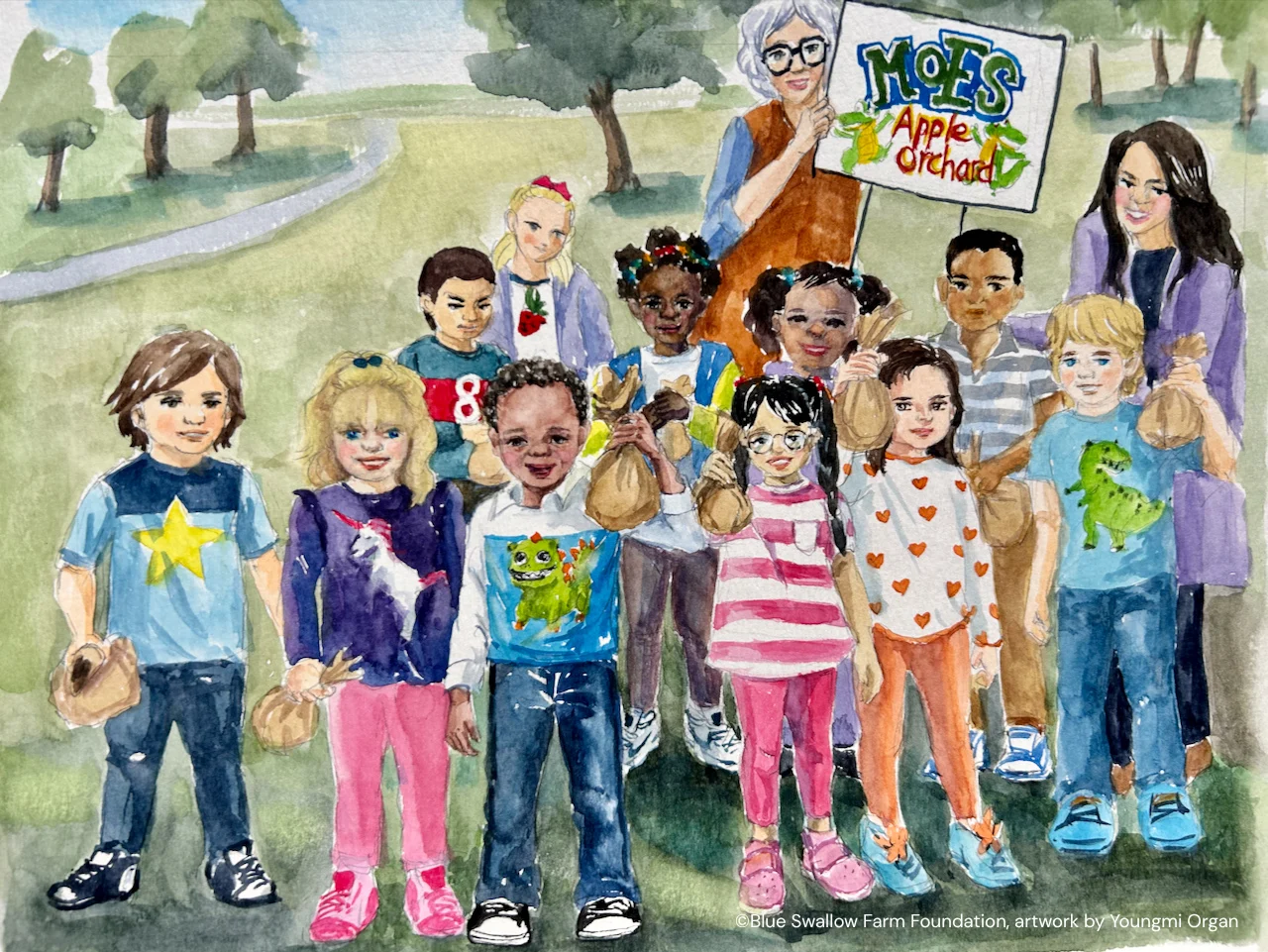
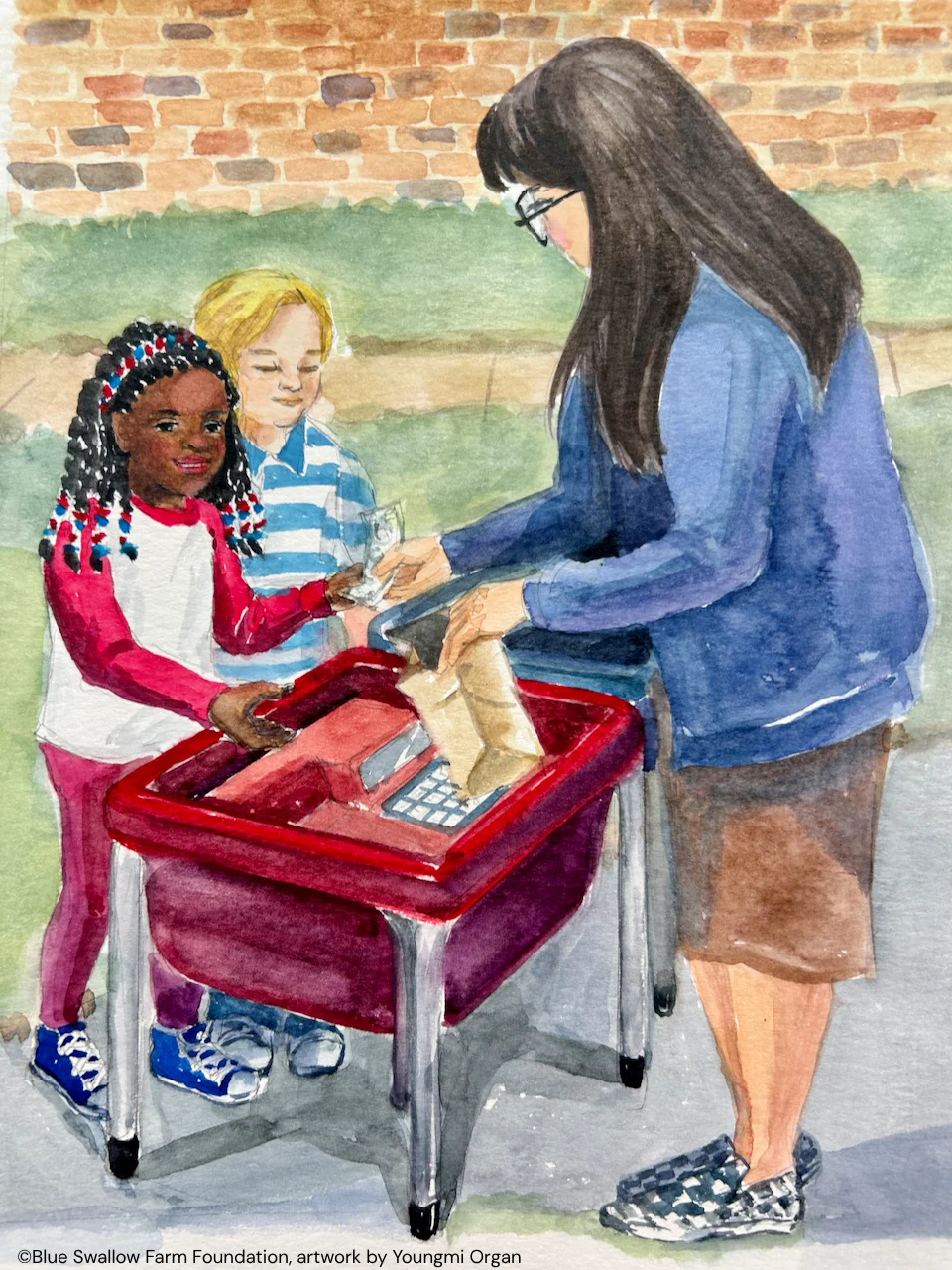
In the following example of play-based learning, we begin with an invitation for the children to explore the process of collecting apples in an apple orchard. Prior to this, or after, you can read a book about picking apples, such as A Day at the Apple Orchard (Faulkner & Krawesky, 2005). For the exploration, prepare the outdoor environment by placing a variety of apples (if they are real, you can use them for taste testing later!) throughout the grass and trees. Provide paper bags or baskets for them to collect the apples in, play money, and a cash register where they can purchase apples. Additional items you can include are a stand and a sign for the name of the orchard, wheelbarrow, scales, and a sign with prices and varieties.
In this invitation to play, students are learning about the process of buying apples, where their food comes from, practicing social interactions with their peers, learning about weight, color, size, sequencing, money, in addition to the physical benefits of balance and coordination, crossing the midline, and you are bringing an experience they may not have the opportunity to have to them. There are also environmental text features providing an opportunity to read words and numbers. Along the way, they may discover one apple weighs more than another, how many apples are in a bushel, and how to count dollars. Additionally, through this process, students are learning about the relationship between humans and food production or agriculture, and economics, which ties in social studies.
An example of guided play provides another opportunity for English language arts (ELA) and mathematics, using the Dr. Seuss (LeSieg, 1961) book, Ten Apples Up on Top! Students can explore balancing 10 apples, real or pretend, and sequencing numbers in order from 1 to 10 and counting or building the letters in their name in order. This brings skills of balance and coordination once again, while building on the apple theme, as well as teaches them the sequence of counting 1 to 10 or spelling their name. This would be an example of guided play, because while it incorporates play, there is a direct aim for students to meet the objective of counting or spelling.
While there are elements of these lessons that are teacher facilitated, the foundation of the experience is built on play-based learning. This can take place over many days, and the apple orchard experience can stick around for students to continue exploring. Ultimately, we want children to make discoveries for themselves as often as possible, while supporting them with other opportunities to build on the knowledge they have constructed.
Share
LATEST RESOURCES
Apples: Play-based and Guided Play Experiences in Pre-K
Apples: Play-based and Guided Play Experiences in Pre-K
Kelsey Chandler Bird […]

Construction of an Outdoor Learning/Flex Space
Construction of an Outdoor Learning/Flex Space
Scott Fortney
Loudoun County Public Schools […]

Engaging Digital Natives Through Literacy, Outdoor Learning, and Technology
Engaging Digital Natives Through Literacy, Outdoor Learning, and Technology
Erik […]